
Founded in 1994 by Thomas Heatherwick, Heatherwick Studio is known for its work in architecture, urban infrastructure, sculpture, furniture design, and strategic thinking. The studio, which aims from the very beginning of each project to protect the planet and ensure that it is valued by the people who use it, responds proactively to the United Nations Sustainable Development Goals. With a particular focus on social sustainability, integration with nature, and fostering discovery, Heatherwick Studio also addresses fundamental issues such as material use, carbon reduction, and energy performance.
Here are the 8 buildings designed by Heatherwick Studio with the principle of sustainability:
1. Google Bay View
Location: Mountain View, US
Year: 2022
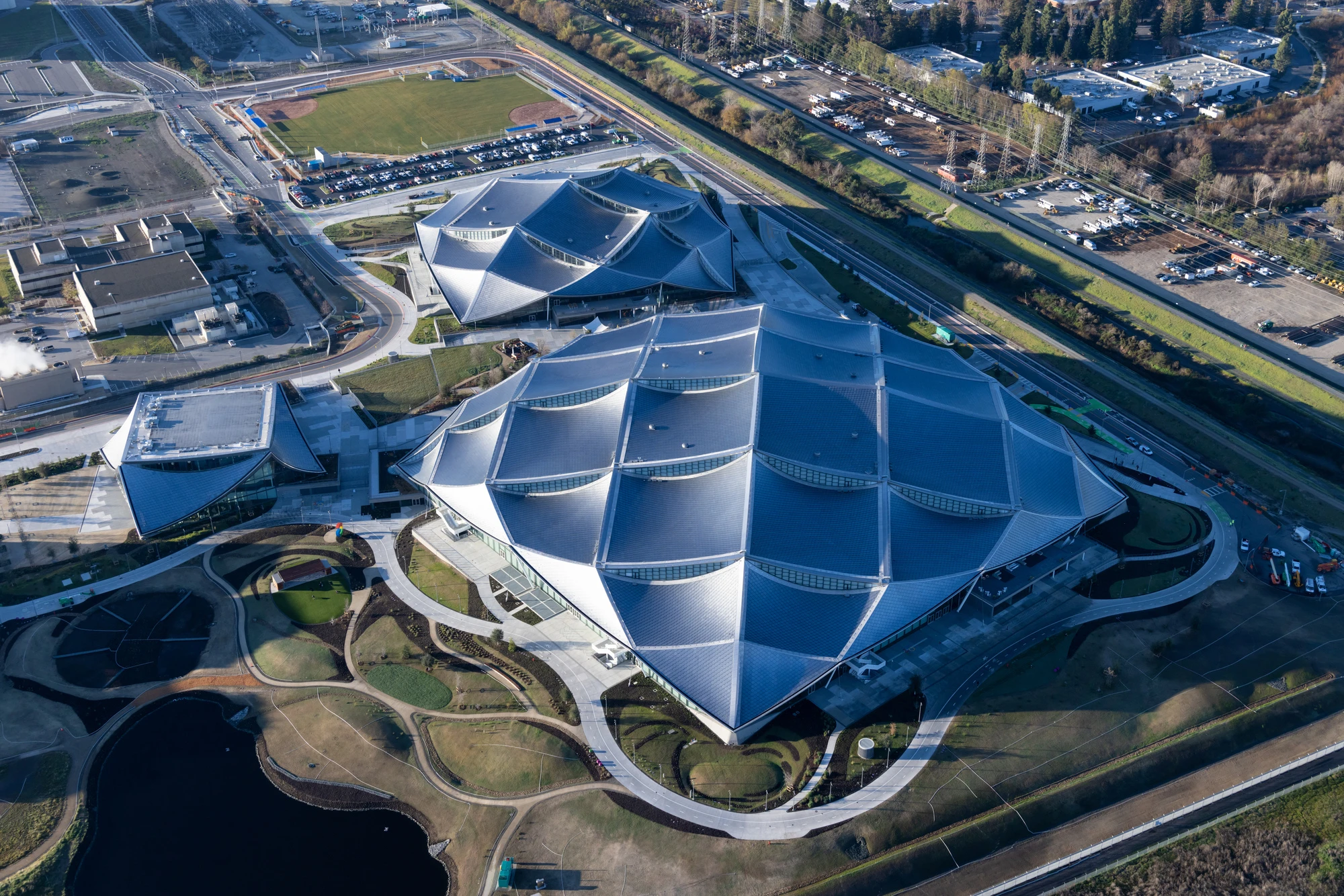
Designed by Heatherwick Studio in collaboration with BIG for Google, Google Bay View is a cluster of three buildings spread across 16 hectares, housing an event center and two offices for 5,000 Google employees. Inspired by the adaptable nature of aircraft hangars, the building’s main structure is a rigid catenary roof. Steel roof structures placed between the columns form a series of canopies integrated with clerestory windows. The dragon-scale-shaped solar roof is covered with 90,000 silver solar panels using the latest BIPV solar technology, generating a significant amount of energy. Home to the largest geothermal pile system in North America, Google Bay View uses the earth’s stable underground temperature to heat and cool the campus, reducing overall energy demand.
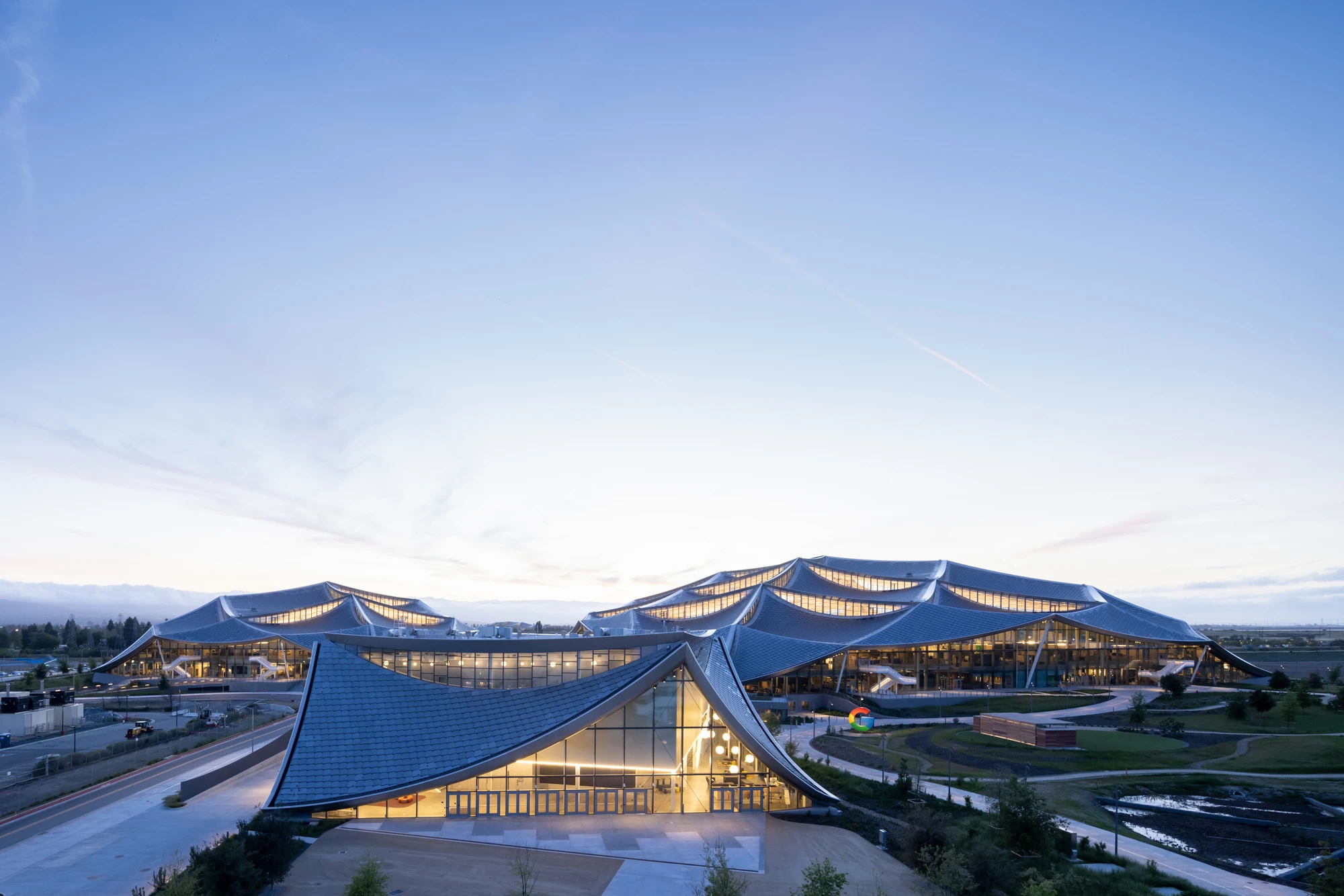
Located in an ecologically sensitive wetland area, the Bay View campus supports existing waterways with a rainwater harvesting system. It aims to win LEED Platinum and the Challenge Material Petal for Living Building.
2. Google Gradient Canopy
Location: Mountain View, US
Year: 2013
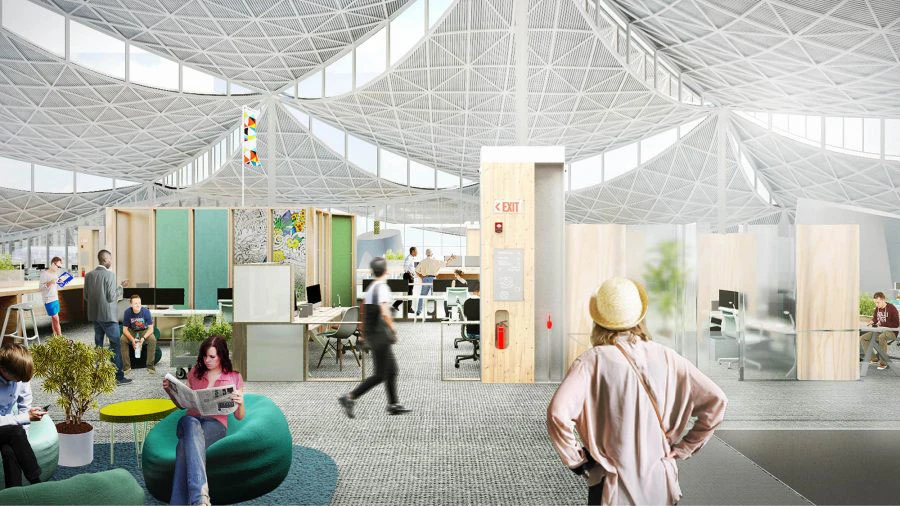
Heatherwick Studio, in collaboration with BIG, designed a new campus and headquarters for Google. Spanning approximately 55,000 m² under a vast linen roof, the project, which serves 3,000 employees, is a sister project to Google Bay View. Inspired by the simplicity and adaptability of aircraft hangars, the Gradient Canopy consists of a series of steel canopies stretched between steel pylons and equipped with 64 smile-shaped high-rise windows. Each canopy is covered with custom photovoltaic panels that generate a significant amount of energy to power the building. A rainwater harvesting system enhances sustainability performance and provides approximately 3 million gallons of reusable water annually.
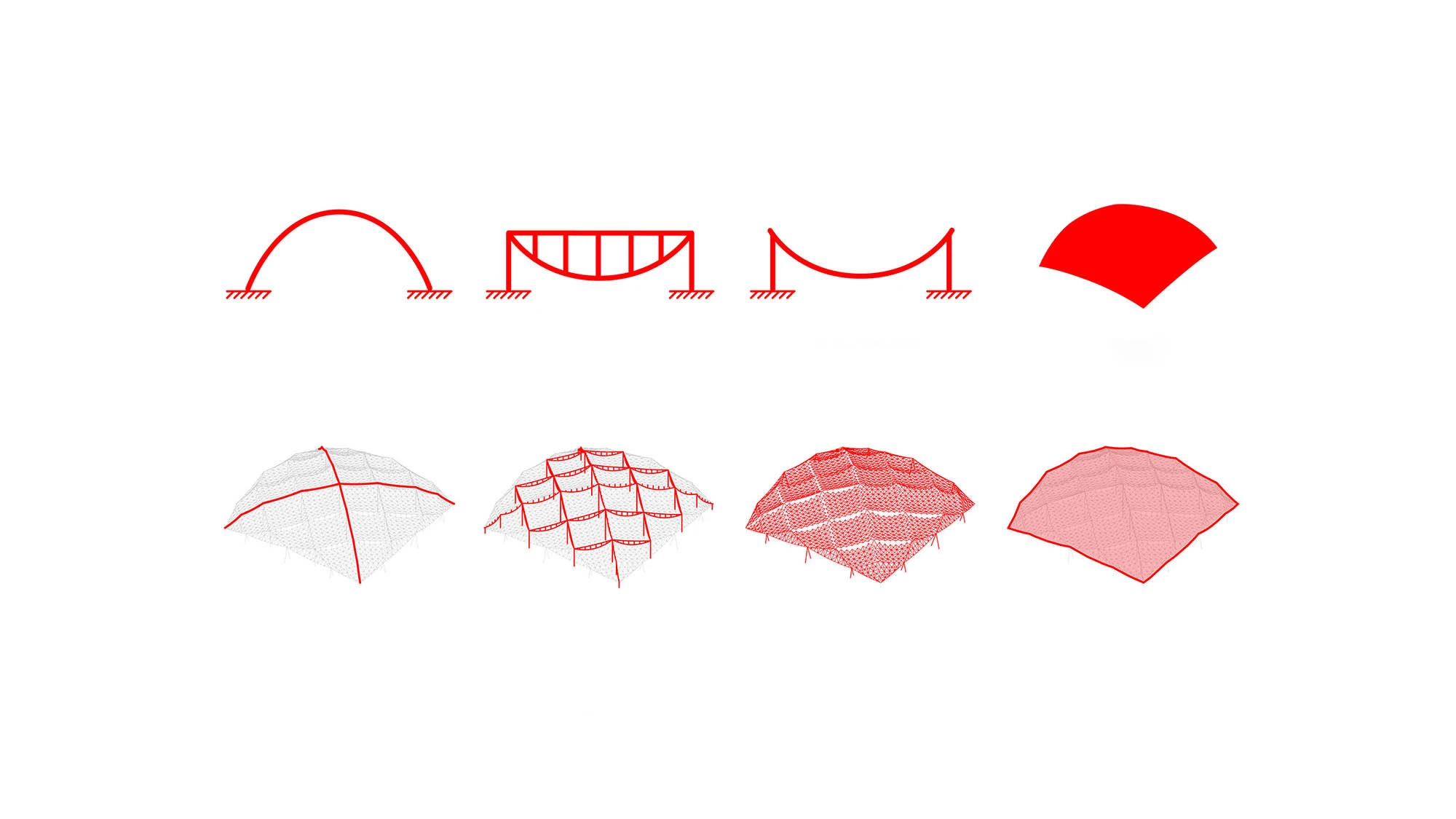
Constructed using recycled materials and 99% FSC-certified timber to promote the circular economy, the Gradient Canopy has received the Living Building Challenge (LBC) Material Petal Certification. Holding LEED Platinum certification, the building is one of the largest workplaces in the world to achieve this globally recognized distinction.
3. Maggie’s Yorkshire
Location: Leeds, UK
Year: 2020
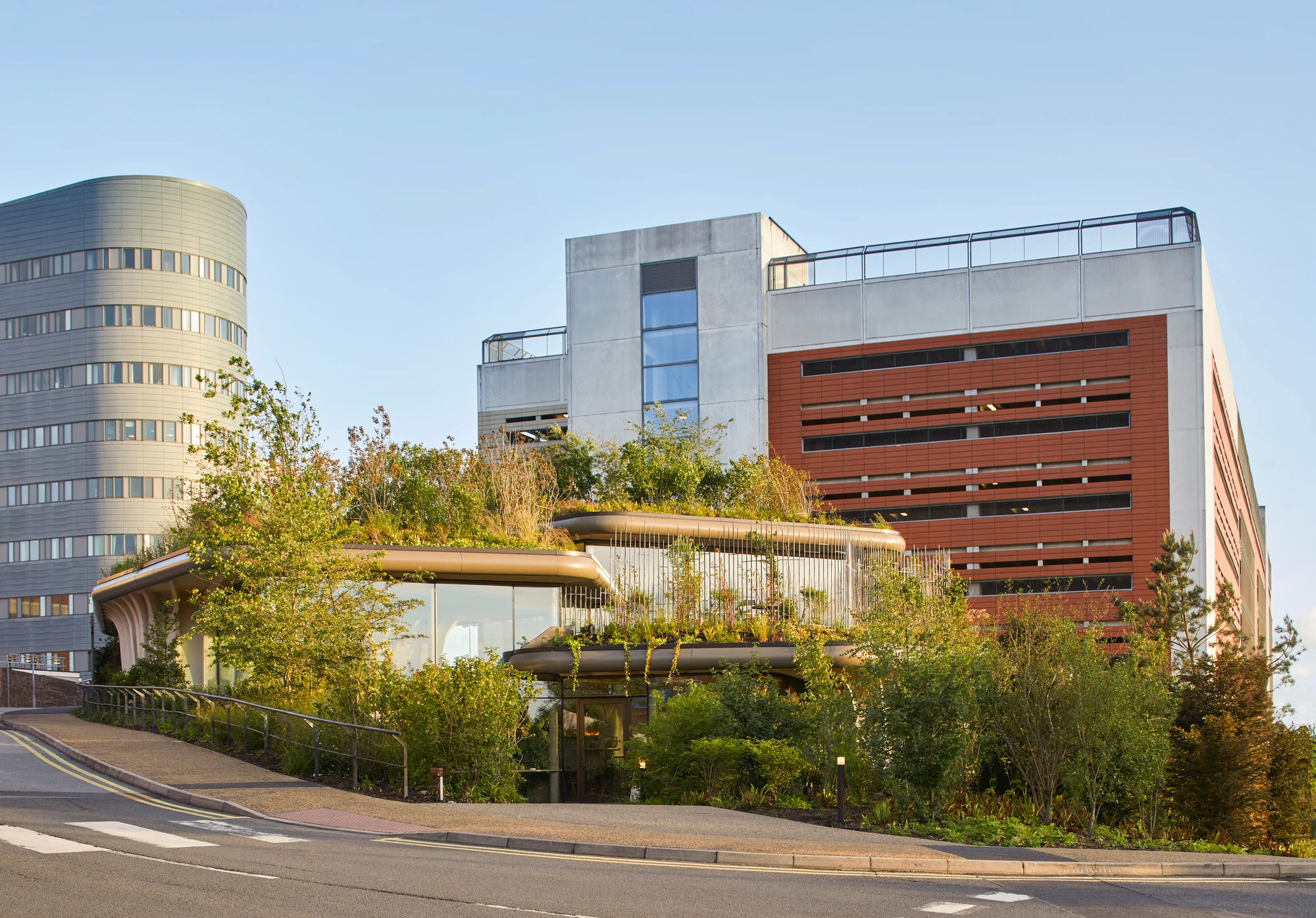
Designed with a strong commitment to sustainability principles, Maggie’s Yorkshire is a new center for Maggie’s Centres, a charity supporting people affected by cancer, located on the campus of St James’s University Hospital in Leeds. Offering a respite from the hospital’s clinical environment for visitors, the warm and inviting space integrates biophilia in a healing and welcoming setting.
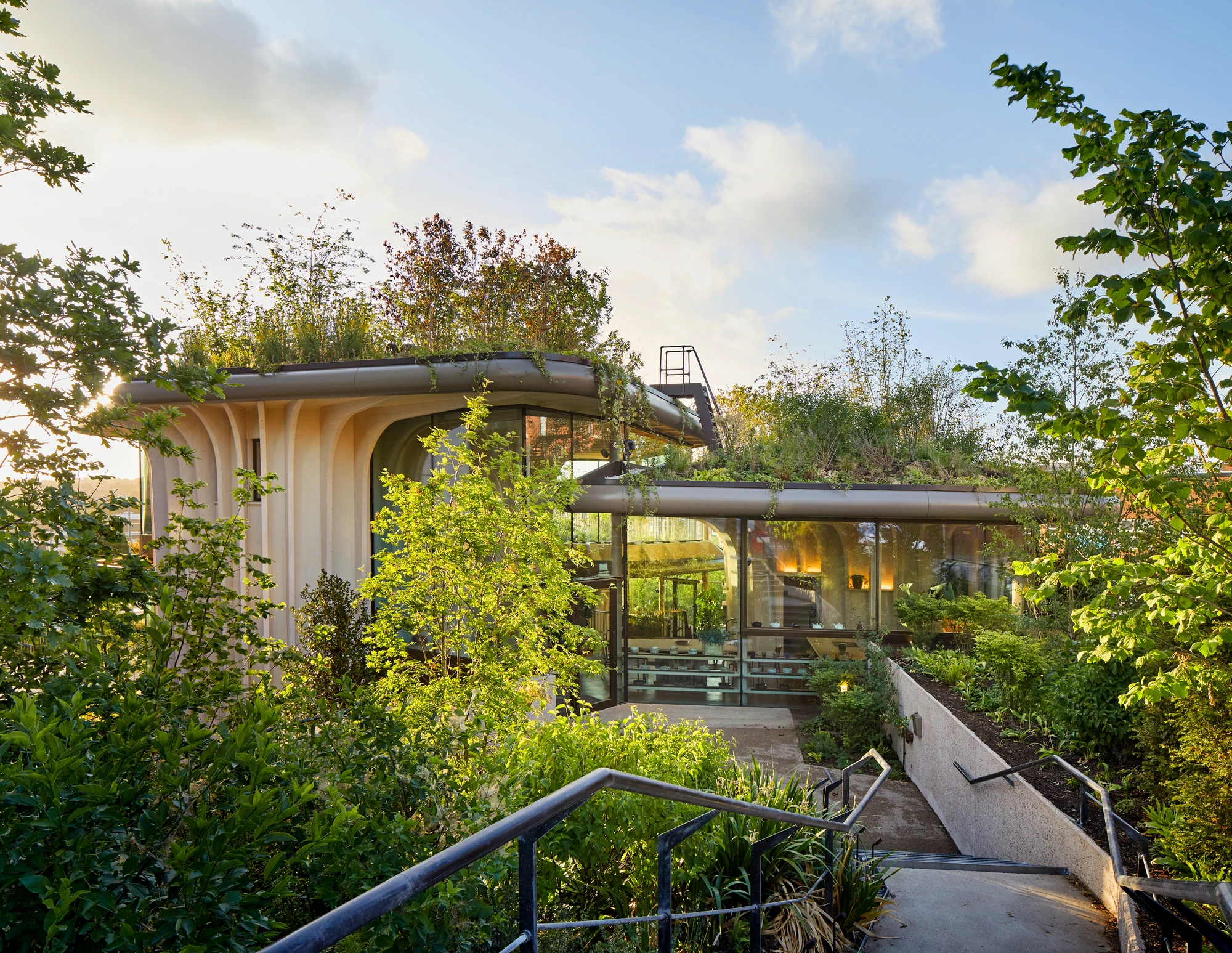
Maggie’s Yorkshire is constructed from natural materials, including prefabricated wood and breathable, healthy materials. Designed as a low-energy building, the center maintains an exceptionally low heating demand thanks to its excellent airtightness, building form, and high thermal performance. Inspired by the Yorkshire woodlands, the Roof Garden includes evergreen areas to provide warmth during the winter months, as well as native English plant species. The surrounding gardens increase biodiversity in the area by 436%.
4. Bombay Sapphire Distillery
Location: Hampshire, UK
Year: 2014
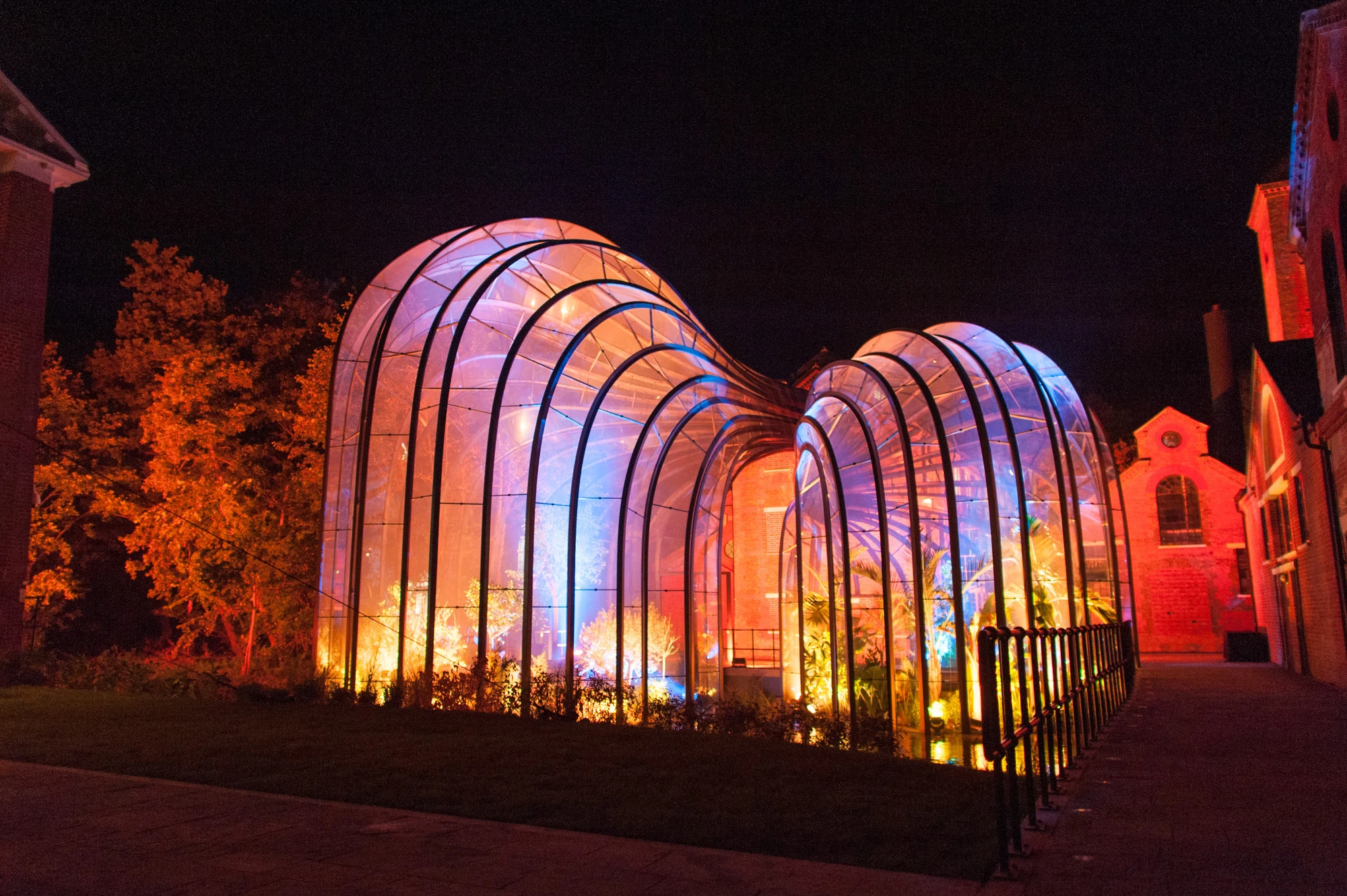
Demonstrating how a historic complex can be transformed in line with sustainability principles, Bombay Sapphire Distillery is a project that converted derelict industrial buildings into a distillery and visitor center. Originally developed as a banknote paper factory for the British Empire, the site had become a sprawling and chaotic complex of over forty buildings. The River Test, which flows through the site, was narrowed and partially hidden within a steeply sloping concrete channel. Aiming to reveal the River Test again, Heatherwick Studio meticulously restored the remaining twenty-three historic buildings, removing the newest twenty structures and creating a new central courtyard through which the expanded river flows.
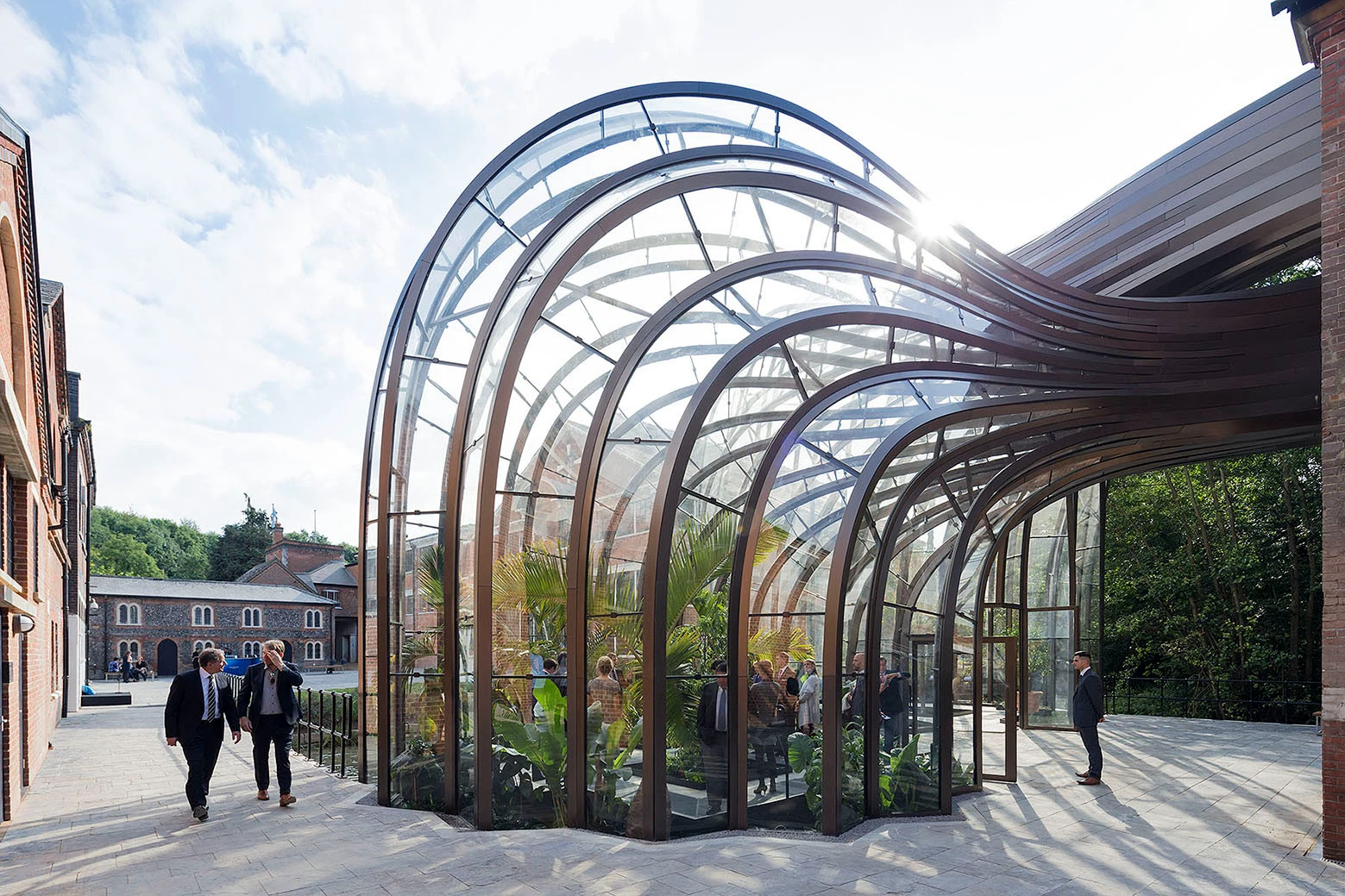
Two interconnected greenhouses, one for each climate condition, allow for the cultivation of both tropical and Mediterranean botanicals used in gin recipes. Their distinctive form allows surplus heat generated by the distillation process to be recycled as free energy, creating the non-native climatic conditions required to warm the glasshouses and nurture the plants in the English climate. The Bombay Sapphire Distillery was the first building refurbishment project to receive an “Outstanding” rating under BREEAM.
5. Little Island
Location: New York, US
Year: 2021
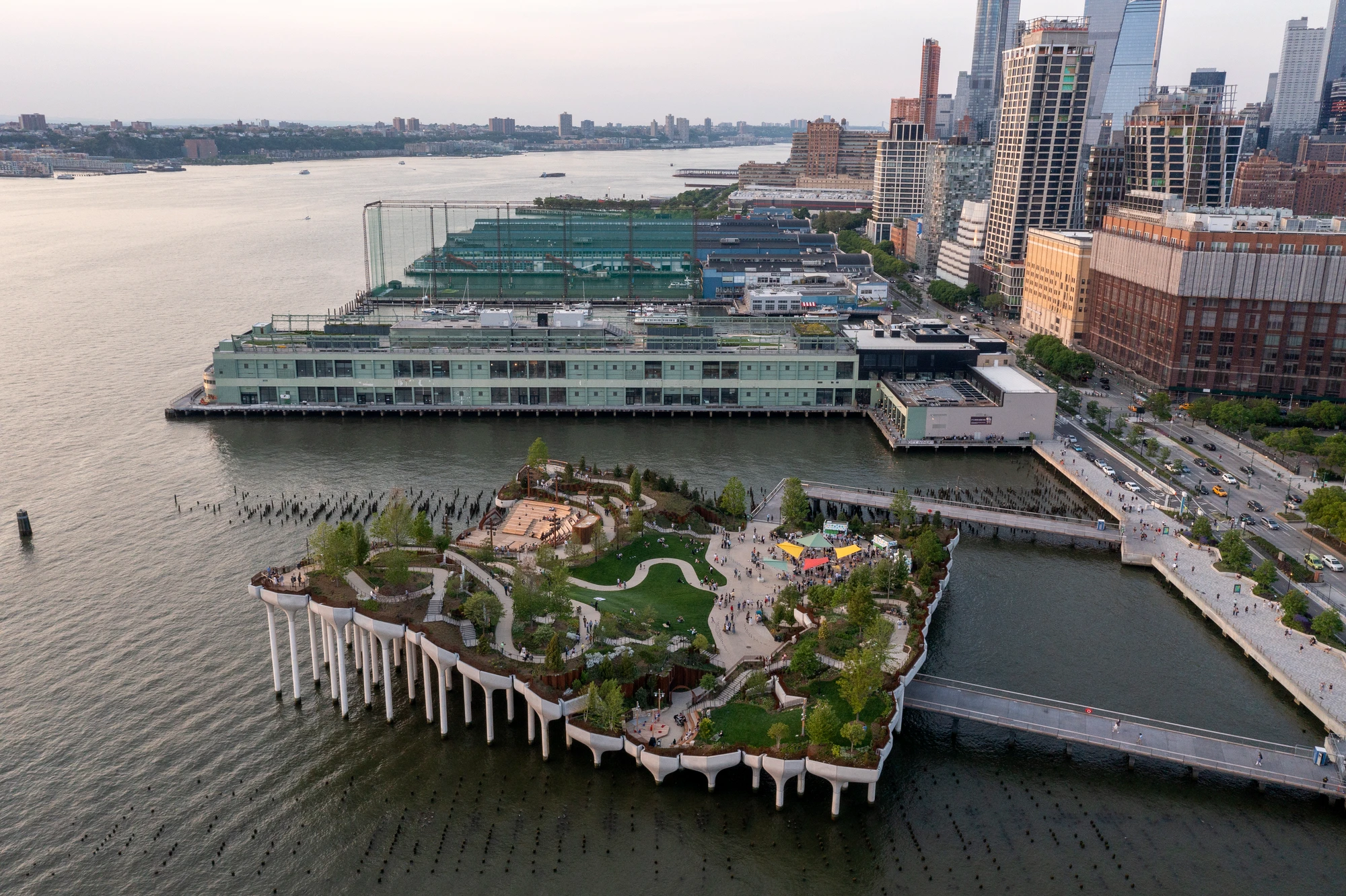
Little Island is a new public park and performance space designed by Heatherwick Studio in one of the world’s most densely populated cities with the highest land values. Inspired by the structural remnants of Pier 54, damaged by Hurricane Sandy, and hundreds of old wooden piles emerging from the Hudson River, the project evolved by taking new concrete piles—essentially needed to support a structure in the turbulent Hudson River—and extending them out of the water to elevate green landscape sections. The individual piles come together to form the park’s unique topography.
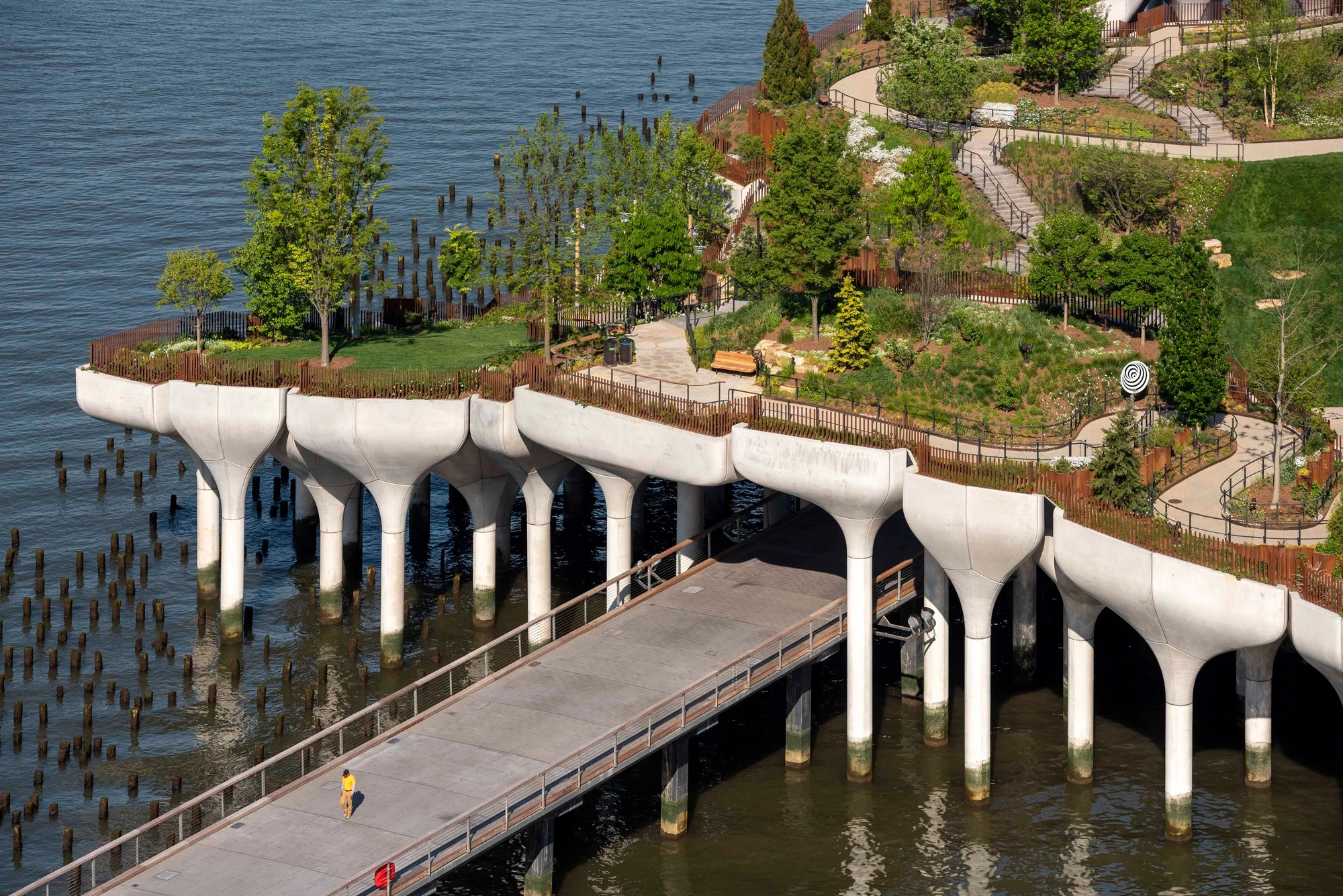
The raised pier not only mitigates the effects of wind to improve the acoustic experience but also allows sunlight to penetrate beneath the structure, supporting the marine ecosystem. More than 400 native trees and plant species suited to the harsh climate were planted across the new landscape.
6. Zeitz MOCAA
Location: Cape Town, South Africa
Year: 2017
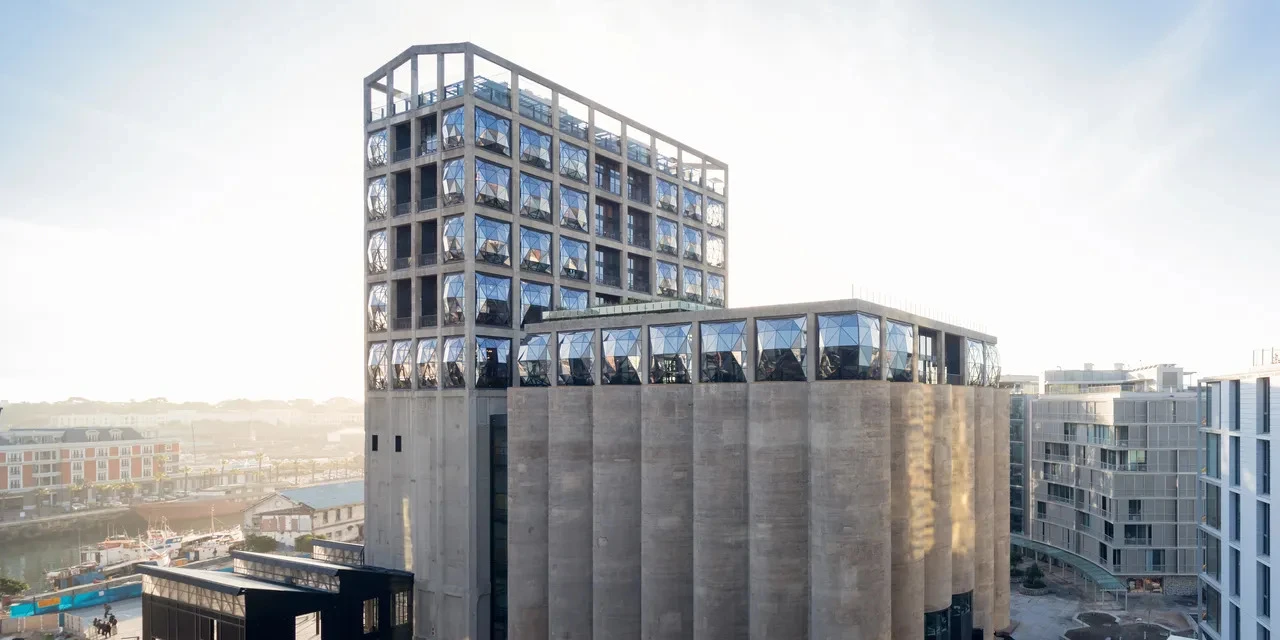
The adaptive reuse of a disused industrial grain silo on Cape Town’s iconic waterfront, Zeitz MOCAA, is a contemporary art museum realized by Heatherwick Studio with a strong commitment to sustainability. The original building consisted of two main elements: a classification tower and 42 tightly packed silo blocks. Rejecting total demolition, the studio preserved the industrial character of the silos, transforming numerous concrete tubes into exhibition spaces for artworks, thus maintaining the building’s industrial spirit.
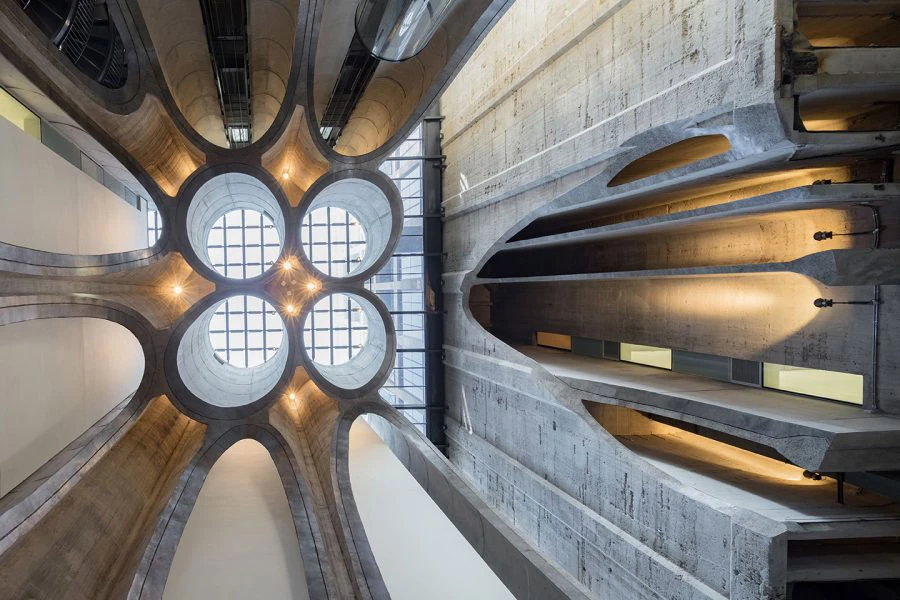
The carved tubes above the atrium are capped with thick laminated glass panels that allow daylight to enter from above, creating a walkable surface for the rooftop sculpture garden while preventing excessive heat gain inside. The project incorporates natural ventilation in the central atrium and circulation areas and a displacement ventilation air conditioning system throughout the galleries.
7. Learning Hub
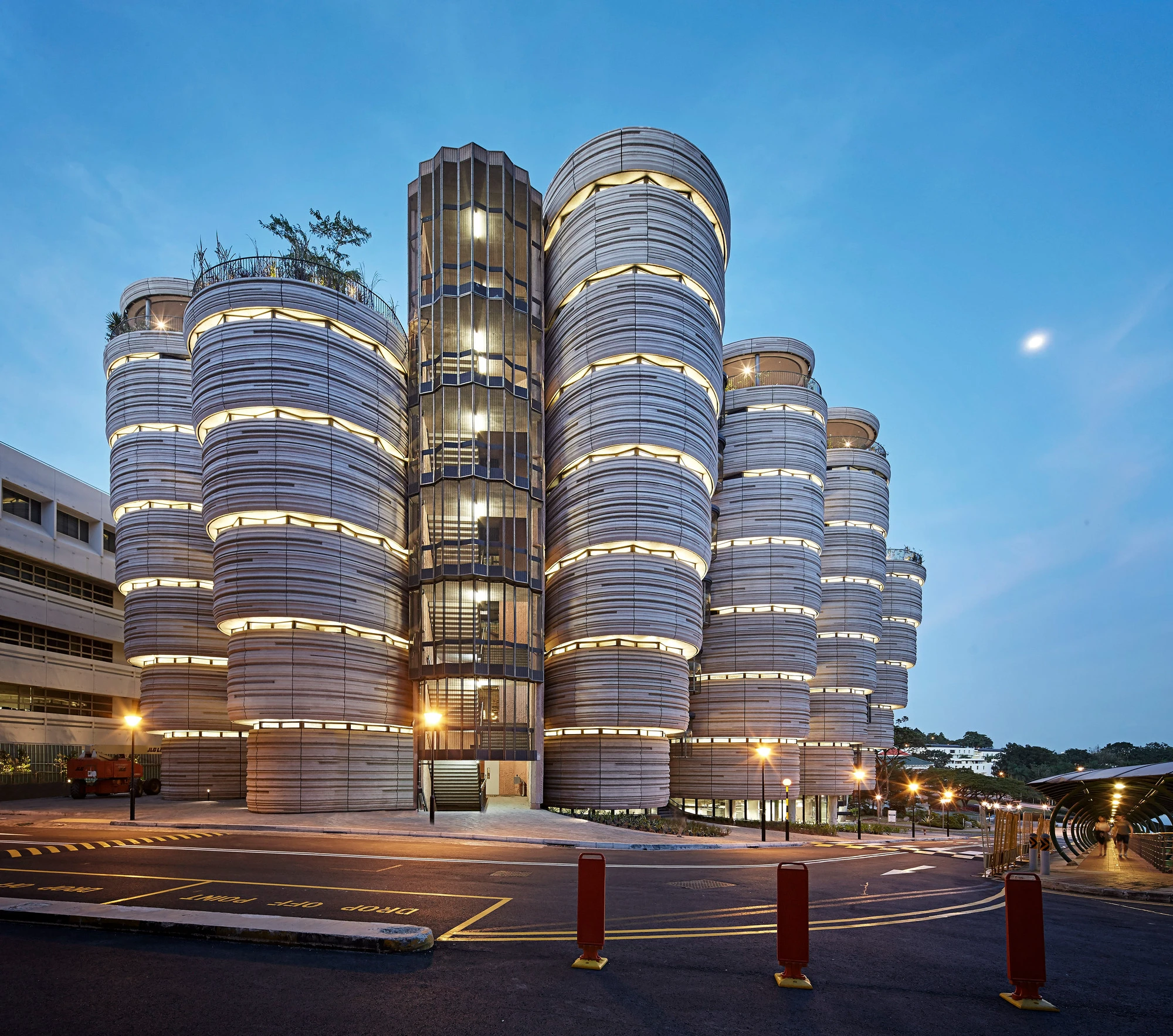
Location: Singapore, Singapore
Year: 2013
Designed for Nanyang Technological University in Singapore as a new learning environment suitable for the digital age, the Learning Hub is conceived as a social space that brings people together and encourages spontaneous dialogue and exchange of ideas. Eliminating conventional corridors to maximize encounters between students and teachers, Heatherwick Studio divided the building into individual classrooms and then stacked them to form a series of 12 small towers. Between the classrooms are unscheduled corners and nooks with garden balconies for pausing to talk and reflect.
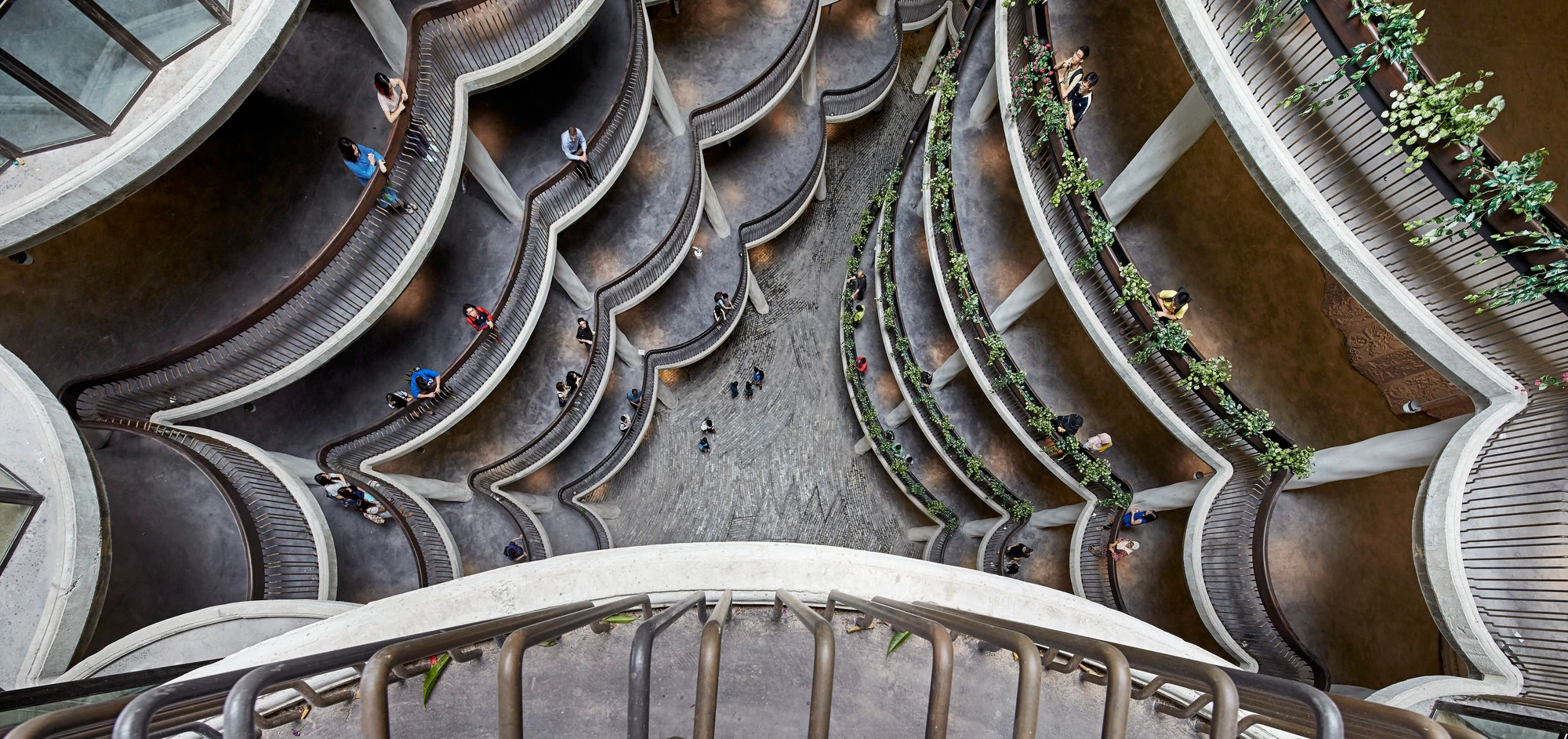
Each naturally lit room also faces a centrally located atrium that is naturally ventilated. Choosing reinforced concrete as the primary structural material, Heatherwick Studio treated it like handcrafted clay, ensuring that its surfaces possess a level of detail and warmth not typically associated with concrete. The building was awarded Green Mark Platinum status, the highest environmental rating in Singapore, due to its naturally ventilated atrium and the use of energy-efficient Passive Displacement Ventilation in the classrooms.
8. Castellana 69
Location: Madrid, Spain
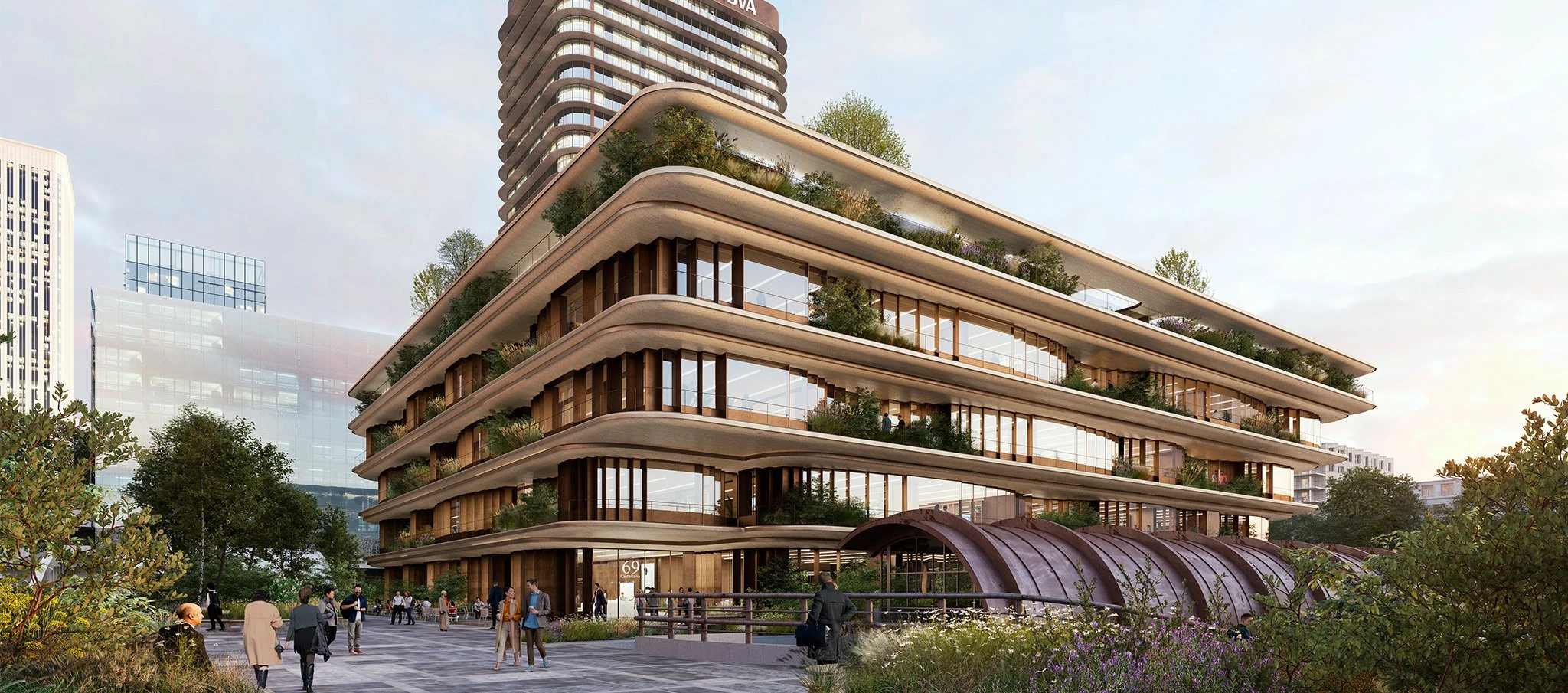
Designed by Heatherwick Studio as a pioneering new office building, Castellana 69 promotes both social and environmental sustainability with its strong commitment to the environment and belief that design creates more livable cities. Employing a hybrid timber structure and a wide range of passive strategies, the building aims to significantly reduce its carbon footprint and overall consumption. The building’s solar panels will generate more energy than the building consumes, ultimately resulting in a net-zero carbon building. Consuming far less carbon than a conventionally constructed office building, Castellana 69 fully benefits from the local climate by creating a seamless transition between indoor and outdoor working and social spaces.
link