

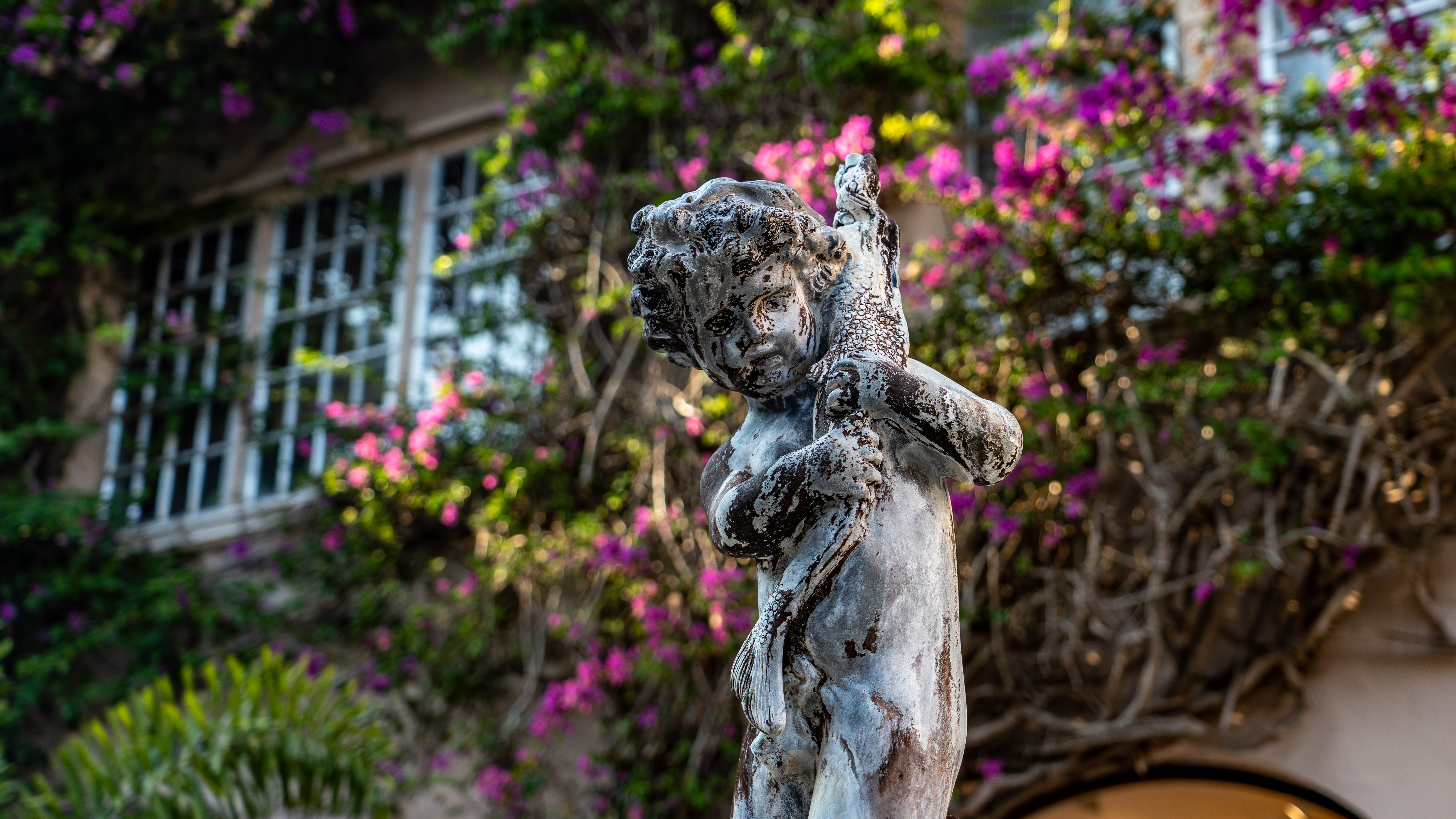

Video: All’s quiet in Worth Avenue’s scenic vias as a new day begins
Take a visual tour of Palm Beach’s scenic vias as a new day dawns in Palm Beach.
Owners of landmarked homes would have an easier time renovating their properties if a list of changes endorsed by the Planning and Zoning Commission wins approval from the Town Council
The proposed regulations presented during the commission’s Oct. 7 meeting include a new “dimensional waiver” that would serve to streamline the application process for renovations, repairs and accessory buildings to landmarked single-family homes.
That system would allow renovation projects for landmarked homes to apply for a waiver that would list the ways the property does not, or will not, conform to the zoning code, said Abraham Fogel, design and preservation planner for the town.
Currently, property owners are required to transmit a separate application for each variance to the zoning code, he told the commission.
Those nonconformities include setback and landscape open space below the town’s requirements as well as lot coverage and building height greater than the town’s threshold.
Most of the commission lauded what they called a much-needed change before voting 6-1 to recommend drafting the regulations into an ordinance for Town Council review. Commissioner Carol LeCates voted no.
“We need to look for opportunities to keep the charm of this town, and Landmarks is the number one place to do that,” commission Vice Chair William Gilbane said. “And I think we have a strong Landmarks Preservation Commission that can support this work.”
Under the proposed system, after a project receives the Landmarks Preservation Commission’s approval, it would no longer have to appear before the Town Council for a variance request public hearing, Fogel said. Instead, the waiver request would be placed on council’s consent agent, which the council can approve without discussion, according to the ordinance tied to the proposed changes.
The town’s Design and Preservation Manager Friederike Mittner said the changes would apply to homes in the town’s low-density residential zoning districts. She also noted that most landmarked homes in those districts already don’t comply with the zoning code, since they were built before the town enacted the code in 1974.
“I’m all for this, I think as we look at our code, we need to make it easier to maintain the character of our town,” Gilbane said.
Another change would allow two-story landmarked properties under 20,000 square feet to construct a two-story accessory structure, if they obtain design approval from the Landmarks Preservation Commission, Mittner said.
The list of proposed changes also includes removing a regulation that classifies any landmark renovation costing more than $2,000 as a major project, according to the ordinance.
The proposals are part of the town’s recent effort to tackle a range of “quick fixes” to the zoning code that could be implemented while staff continue to draft a new code.
Aimee Sunny, director of preservation and planning for the Preservation Foundation of Palm Beach, praised the proposed changes, noting that her organization had been advocating for such adjustments for five years.
“Special properties really do need a special code that addresses how you can look at making sure they continue to be livable, lovable parts of our community, and not just museums that are frozen in time,” she said.
The Palm Beach Town Council will conduct its first review of the ordinance during its Nov. 11 meeting.
Diego Diaz Lasa is a journalist at the Palm Beach Daily News, part of the USA TODAY Florida Network. You can reach him at [email protected].
link